Nursery
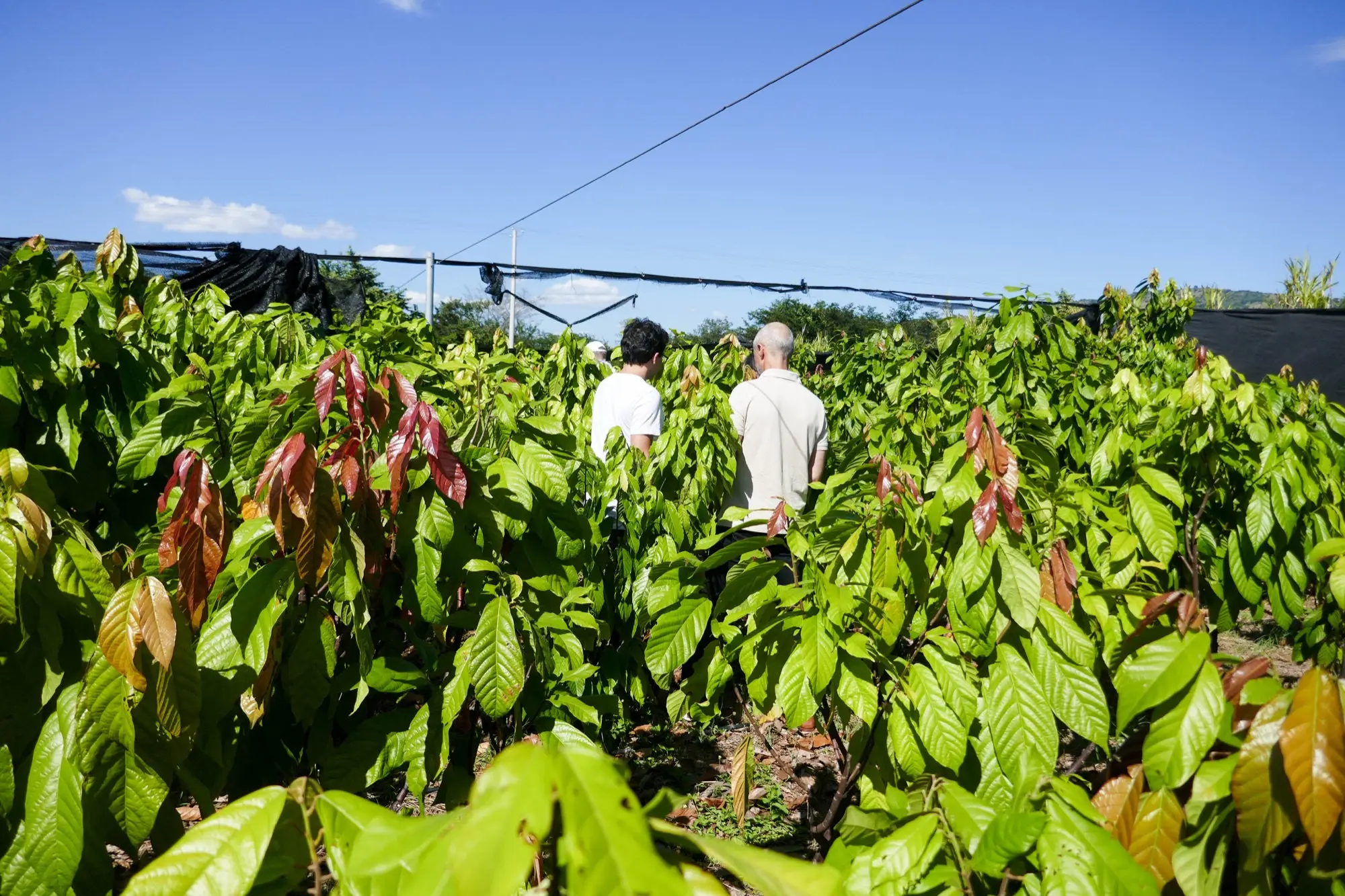
Grafted in our own nursery
We graft every variety in our own nursery, so a farmer who plants Chuno gets Chuno. Our germplasm bank lets us study productivity and preserve the genetics.
Producers
The farming families
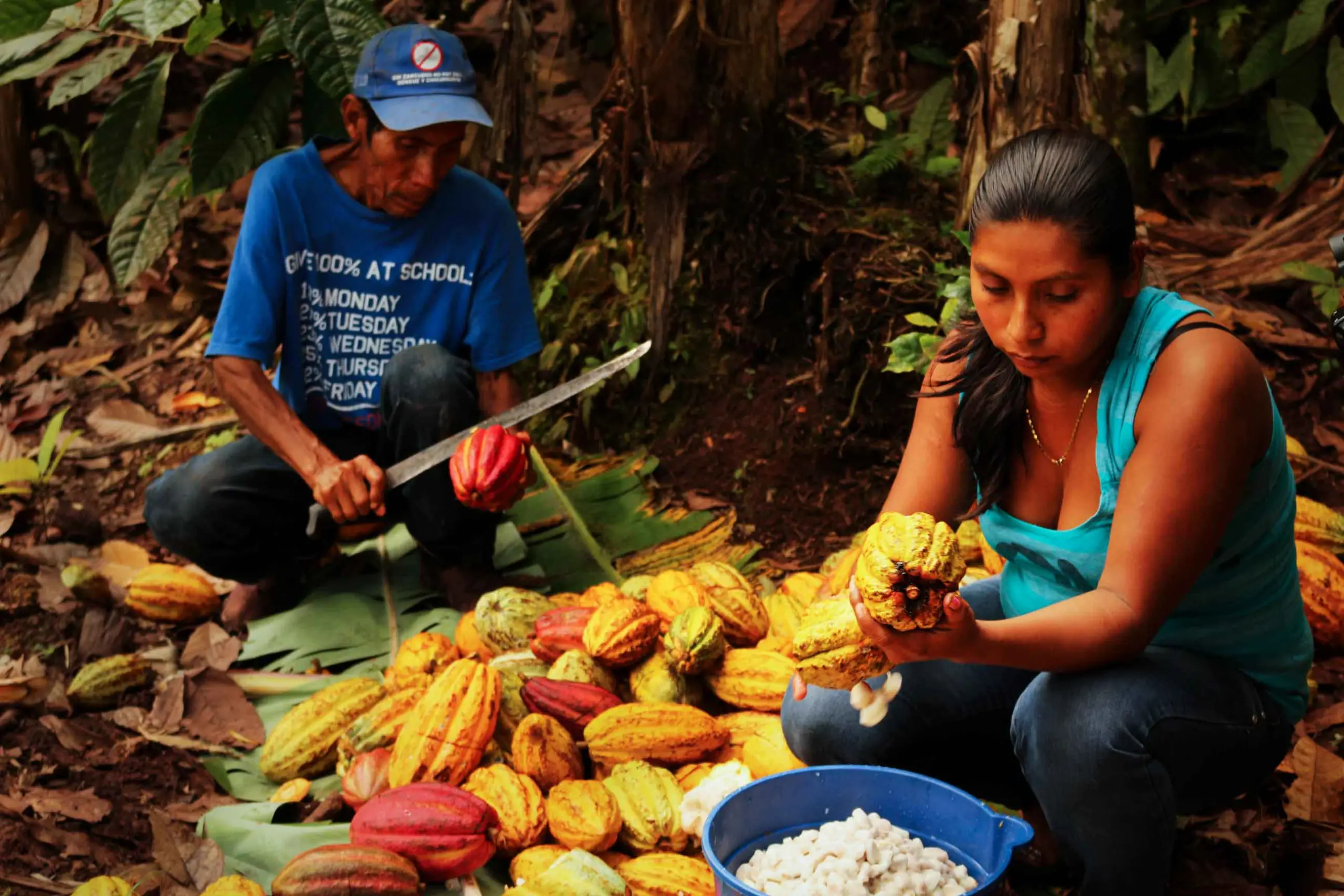
About 470 farming families grow our cacao: 320 in our organic program in Waslala and Siuna, and 150 in El Tuma-La Dalia and Río Blanco. Our technicians visit them free of charge. We also train them in good agricultural practices and in running a farm as a business.
Harvest
Bought wet at the farm gate
We collect wet cacao at the farm gate and measure brix, pH and temperature on each bag before reception. We do the fermenting and drying ourselves.
Fermentation starts at the farm, in Ingemann's own wooden boxes, and continues at our facility.
Post-harvest
Fermentation and drying
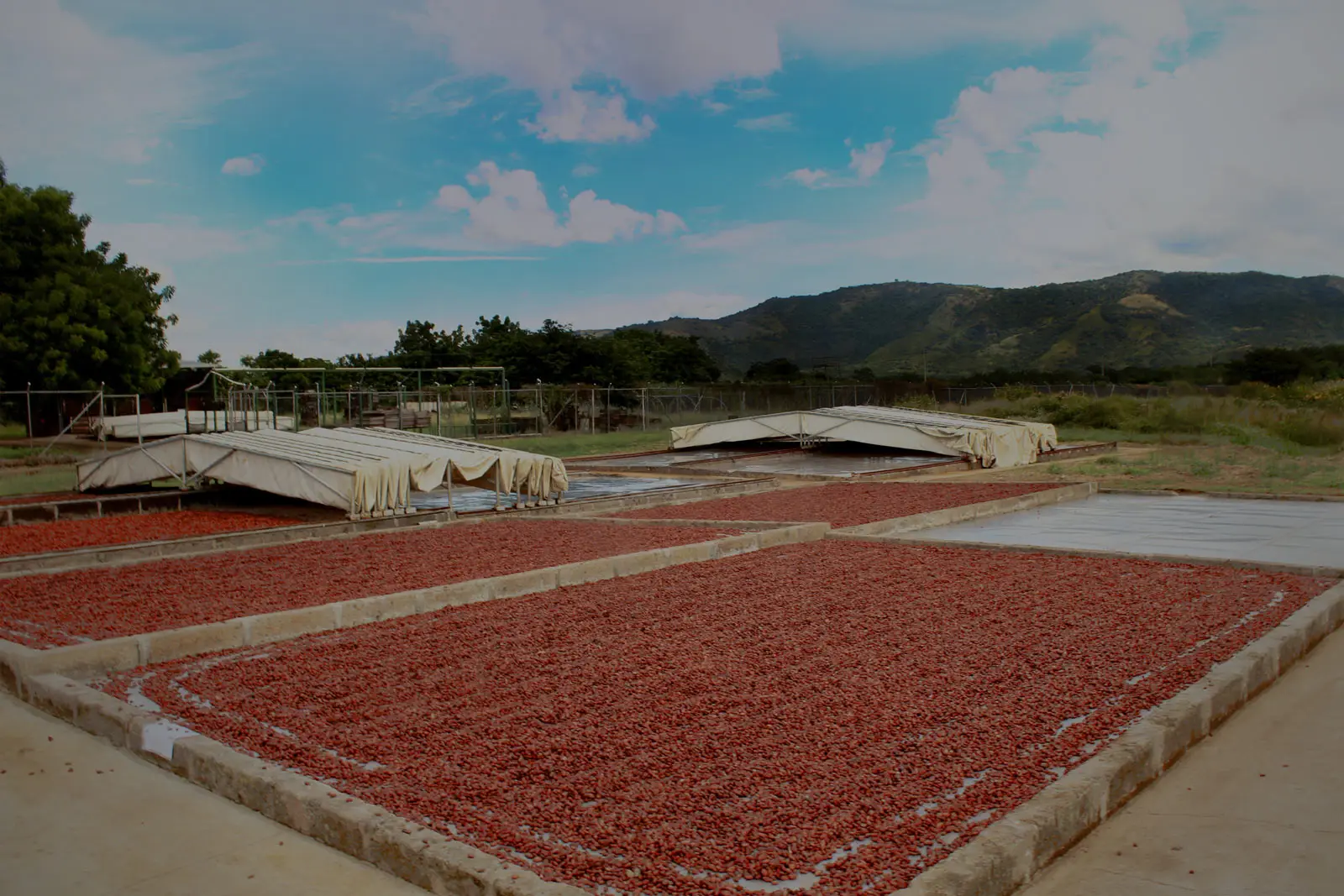
At our facility in Tipitapa the wet cacao ferments in wooden boxes. Then it dries on stainless steel platforms.
We adapt fermentation and drying to the target flavor profile. Chuno comes in five protocols and O'Payo in three.
Quality checks
Checks on every lot
We trace each lot back to the farm. We check temperature, humidity and bean size, run cut-tests and tastings, and record everything. Our team sorts the beans by hand and stores them in our warehouse until shipment.
Cacao changes from harvest to harvest, so we cut-test and taste every lot before it ships.